

Reference: 5048
Protection formulée à partir de matières premières majoritairement minérales et végétales pour panneaux de CLT. Composition contrôlée par le laboratoire "EPH".
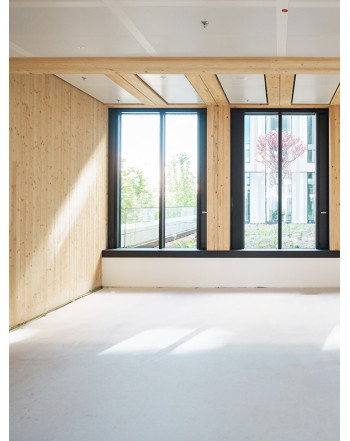
L’objectif d’un traitement de surface des panneaux de CLT (Cross Laminated Timber) destiné à un usage intérieur est généralement de préserver l’aspect naturel du bois, de faciliter le nettoyage et de les protéger contre la saleté et l’humidité.
Les meilleurs choix pour les panneaux de CLT d’intérieur sont des produits perméables à la vapeur d’eau, qui laissent le bois respirer, ce qui contribue à un bon climat intérieur.
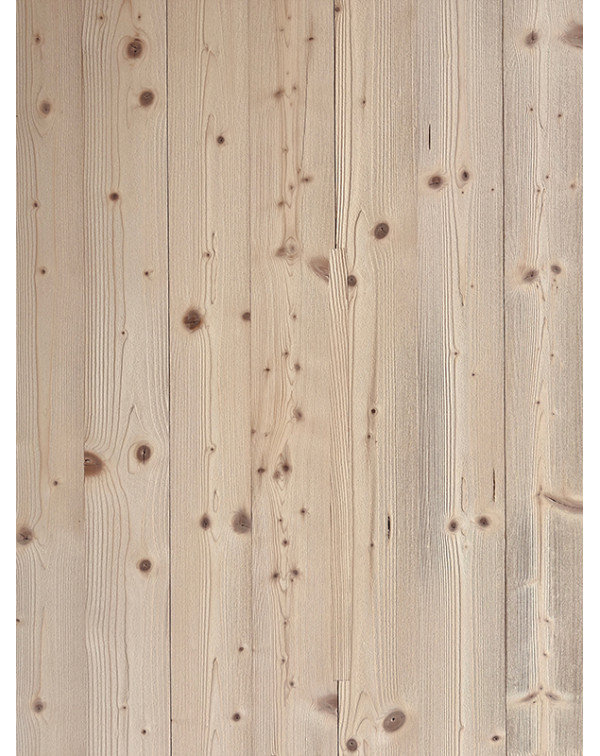
À l’intérieur, pour empêcher les panneaux CLT de jaunir avec le temps, il est recommandé d’utiliser une huile de protection naturelle blanche ou le « CLT-L » qui permettra de conserver l’aspect clair du bois
Protection du CLT sans altérer son esthétique
Amélioration de la luminosité des surfaces bois
Produit adapté aux projets orientés qualité de l’air intérieur
Application rapide = gain de temps sur chantier
Astuce :
Faites toujours un essai avant d’entreprendre votre travail.
For questions about a product, could you please consult its technical data sheet before contacting us?
Cross-laminated timber (CLT) – or CLT elements – refers to solid timber components made up of layers of boards glued together in a criss-cross pattern, which are often used as load-bearing structures in the walls, floors and roofs of single-storey or multi-storey buildings. They offer high strength in relation to their weight, but CLT elements are also a moisture-sensitive material, a factor that must be taken into account right from the design stage.
Building with CLT panels is becoming increasingly popular, but CLT panels are sensitive to moisture. The treatment of CLT (cross-laminated timber) panels for interior use is primarily necessary to protect the material from moisture during the construction phase, ensure its dimensional stability, prevent damage and achieve the desired aesthetic appearance.
CLT is a hygroscopic and vapour-permeable material, which means it absorbs and releases moisture depending on its environment.
Damage to CLT elements can result, in particular, in significant mould and rot growth, as well as the formation of cracks leading to leaks in the air and vapour barrier. This damage leads, for both types of components, to a deterioration in the indoor climate and has been observed – following the incorrect handling of CLT components – in vulnerable damp rooms and unsecured installations.
CLT elements are generally delivered from the factory with a moisture content of 12% – plus or minus two per cent. This is significantly higher than the moisture content under winter conditions, when the wood’s moisture content is expected to be around 8% once it has reached equilibrium with the indoor climate. It is this difference in moisture content that causes drying and, consequently, shrinkage. A slight presence of shrinkage cracks on the surface of CLT elements is generally to be expected.
As CLT elements are sensitive to moisture, it is recommended that the precautions applicable to traditional timber construction be followed. The client or their consultant must draw up a moisture management plan detailing the handling of the elements from the factory through to the completion of the building.
Protection against moisture and damage: CLT components are sensitive to moisture, particularly during transport, storage and assembly. Moisture can lead to the growth of mould and fungi, as well as dimensional changes in the timber. This is why a temporary protective coating (such as ‘wet guard’) is often applied to surfaces to prevent water ingress until the building is enclosed.
Prevention of shrinkage cracks: As wood dries, it shrinks. If CLT panels are installed whilst they have a high moisture content and then dry in a heated indoor environment, cracks may appear. A surface treatment can help to control this process.
Air-tightness and stability: To ensure the building is airtight and to prevent noise caused by cracks, it is important to treat the joints correctly.
Aesthetics and finish: If CLT panels are to be left exposed (in residential architecture), they are often treated to preserve the appearance of the wood, protect against stains and ensure a uniform surface.
Vapour-permeable surface: it is recommended to use vapour-permeable treatments (e.g. paint or oil) so that the wood can continue to ‘breathe’ and regulate the room’s humidity balance.
Consequences of a lack of treatment:
If CLT is not adequately protected, this can lead to costly repairs, damp patches on interior surfaces and structural problems caused by the movement of the timber.
REF: 7811-7834
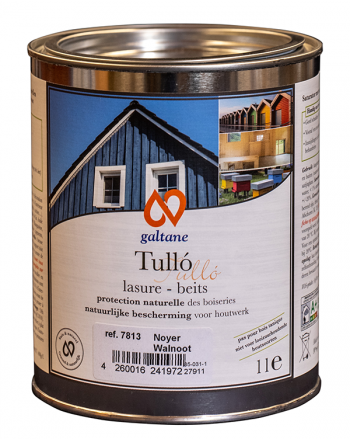
Prodigieuses huiles protectrices. Pour l’intérieur et l’extérieur ! à base d’huile de lin, de ricin, les lasures sont transparentes et non incolores, ce qui permet de toujours voir la structure du...Prodigieuses huiles protectrices. Pour l’intérieur et l’extérieur ! à base d’huile de lin, de ricin, les lasures sont transparentes et non incolores, ce qui permet de toujours voir la structure du bois, à l’inverse d’une laque. À l’extérieur, elles confèrent une protection de longue durée contre la photodégradation et le vieillissement climatique du bois. À l’intérieur, elles protègent et embellissent le mobilier, les jouets, les châssis, le bardage, la charpente… Elles conviennent également aux ruches.
REF: 5020
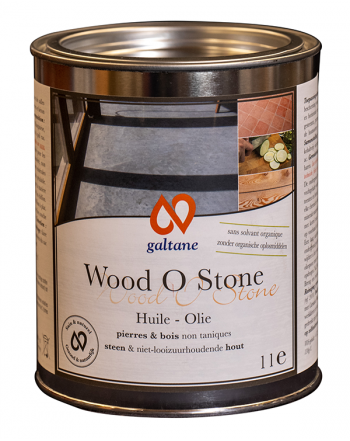
Remarkable protection for bathroom surfaces and worktops, horizontal and vertical surfaces. Wood O Stone is a natural oil, free from organic solvents, for protecting and finishing mineral surfaces...Remarkable protection for bathroom surfaces and worktops, horizontal and vertical surfaces. Wood O Stone is a natural oil, free from organic solvents, for protecting and finishing mineral surfaces such as porous natural stone, smooth clay plaster, "waxed concrete", porous concrete screeds, cement tiles, porous limestone, porous marble, porous sandstone, terracotta and non-tannic wood (pine, larch, beech, poplar, OSB, MDF, etc.). It also fixes dust on brick walls.
You may also like :
REF: 6300
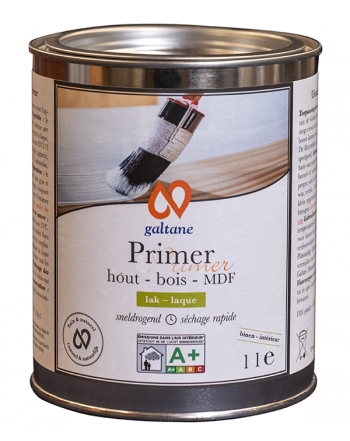
Sous couche pour bois poreux avant l’application de la laque à l’huile végétale Galtane. Usage exclusivement intérieur. Le Primaire pour laque Galtane permet le bouchage des pores et atténue une...Sous couche pour bois poreux avant l’application de la laque à l’huile végétale Galtane. Usage exclusivement intérieur.
Le Primaire pour laque Galtane permet le bouchage des pores et atténue une remontée des tanins (chêne, châtaignier, …) au travers de la laque. Facile à mettre en œuvre. Séchage rapide. Les pigments sont conformes aux exigences de la norme EN71/3 (jouets d’enfants).
REF: 8306
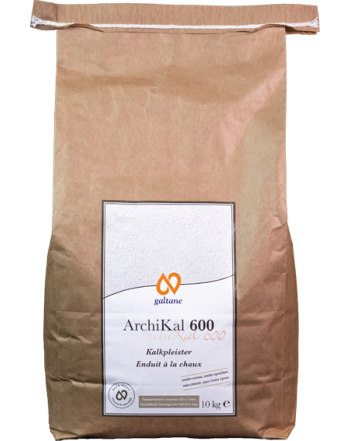
ArchiKal 900 est un enduit décoratif à la chaux hydratée ininflammable A1. Par ses multiples apparences, ArchiKal 900 est un enduit chaleureux qui se caractérise par des effets de nuances et de...ArchiKal 900 est un enduit décoratif à la chaux hydratée ininflammable A1. Par ses multiples apparences, ArchiKal 900 est un enduit chaleureux qui se caractérise par des effets de nuances et de couleurs.
Son résultat dépendra de son applicateur, d’un grain grossier jusqu’au lustre lissé et ciré du plus raffiné.
Sans égal, ArchiKal 900 enduit à la chaux est une finition qui donnera vie aux murs, tant sa texture est douce au toucher et au regard. Grâce à ses nombreuses options de couleurs, ArchiKal 900 rehaussera l’ambiance de nombreuses pièces privées, d’hôtels, de restaurants, de magasins… Qu’il s’agisse de restauration de bâti ancien ou d’intérieur moderne.
REF: 4050
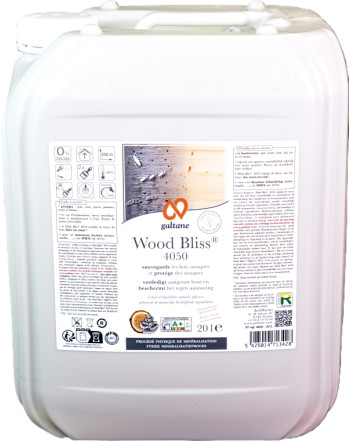
Wood frame treatment Wood Bliss® modifies the structure of the wood frame by removing its nutritional substances and thus neutralizes the development of xylophagous or wood-boring insects and...Wood frame treatment Wood Bliss® modifies the structure of the wood frame by removing its nutritional substances and thus neutralizes the development of xylophagous or wood-boring insects and lignivorous fungi. Its effectiveness is proven on Coleoptera order (woodworm, house longhorn beetles) or Isoptera order (termites). Wood Bliss® does not contain any insecticides or biocides. It maintains the healthy atmosphere of living spaces and presents no risk for pregnant women, infants, people with allergies or sickness, stables, kennels, etc. Wood Bliss® also strengthens wood damaged by attacks.
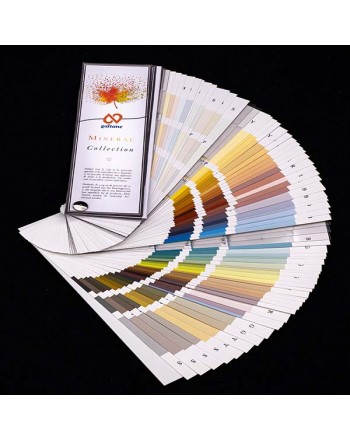
REF: Nuancier Mineral Collection
Minera l Collection can be applied to the following selected paints: Šyl - Out Šyl - In Oil paint Clay paint Milk paint Archikal 900 - lime plaster Lime paint paint (180 of 200 colours)Šyl - Out
Šyl - In
Oil paint
Clay paint
Milk paint
Archikal 900 - lime plaster
Lime paint paint (180 of 200 colours)
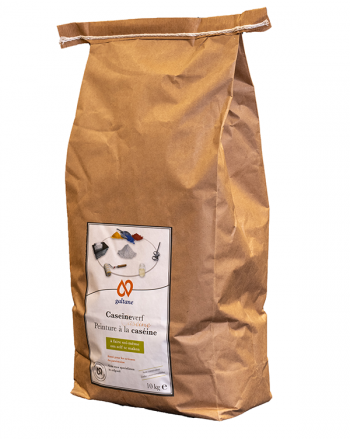
REF: 8150
Prepare your own natural milk paint... According to the Mineral Collection colour chart, there are over 250 colours to choose from. Historical and traditional, milk paint has an exceptional matt...Prepare your own natural milk paint... According to the Mineral Collection colour chart, there are over 250 colours to choose from.
Historical and traditional, milk paint has an exceptional matt finish, with light, subtle nuances.
Made from purely natural ingredients, Galtane natural casein paint contains no preservatives (MIT/BIT).
It is easy to prepare and has excellent adhesion and covering power.
With its safflower oil, Galtane milk paint also offers very good durability.
This genuine casein (milk molecule) interior matt paint is acrylic-free,
can be applied by roller or brush (corded effect) to a wide range of new or old surfaces, except damp rooms.
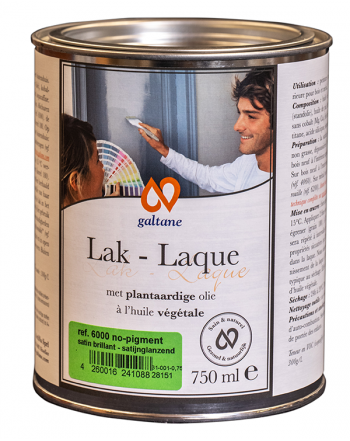
REF: 6000
Vernis transparent intérieure pour bois et métal. Il offre une finition satin-brillant. Bon à savoir : Sa composition riche en huile végétale rend la laque "no-pigment" Galtane plus fluide que les...Vernis transparent intérieure pour bois et métal. Il offre une finition satin-brillant.
Bon à savoir : Sa composition riche en huile végétale rend la laque "no-pigment" Galtane plus fluide que les vernis conventionnelles.
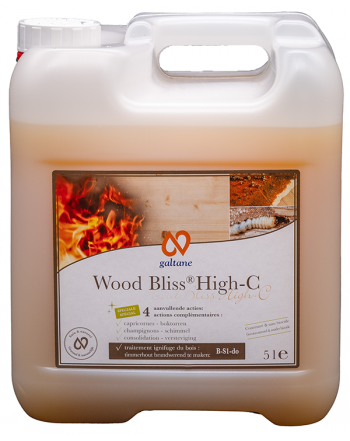
REF: 4055
In addition to Wood Bliss®, Wood Bliss® High-c can be used in the event of a recurrence of Capricorn beetle and as a final treatment against merula. As a preventive measure for new pieces of wood...In addition to Wood Bliss®, Wood Bliss® High-c can be used in the event of a recurrence of Capricorn beetle and as a final treatment against merula.
As a preventive measure for new pieces of wood to be installed in masonry and as a curative measure.
Wood Bliss® High-C is fire retardant to EN 13501-1 (B-S1-D0).

REF: 2040
Ciral, a natural polish formerly known as "Carnauba touch", has been made from rice bran wax since 2020. Ciral, a natural polish formerly called "Carnauba touch", has been made from rice bran wax...Ciral, a natural polish formerly known as "Carnauba touch", has been made from rice bran wax since 2020. Ciral, a natural polish formerly called "Carnauba touch", has been made from rice bran wax since 2020. This is the envelope that surrounds the grain of rice.
Ciral is a natural polish that increases the water and abrasion resistance of wood, stone, limewash paint, smooth plaster and metal.
It restores shine to oiled, varnished and sealed parquet.
Anti-static and with a pleasant scent, wax can be used undiluted on a damp sponge or cloth, or mixed with washing water.
Economical and environmentally friendly, this natural wax does not yellow surfaces.
REF: 2074
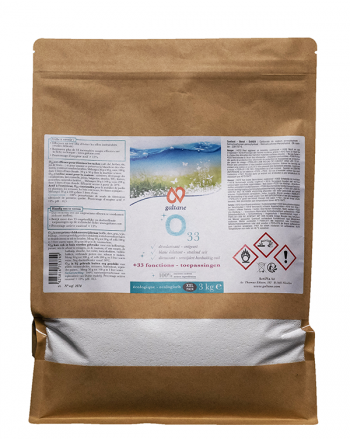
Aux caractéristiques remarquables, « O33 », percarbonate de soude, a une excellente vitesse de dissolution. Il est efficace pour éliminer les taches (café, thé, herbes, vin, jus de fruits…) et pour...Aux caractéristiques remarquables, « O33 », percarbonate de soude, a une excellente vitesse de dissolution. Il est efficace pour éliminer les taches (café, thé, herbes, vin, jus de fruits…) et pour assainir et préserver la blancheur des vêtements, textiles et couches lavables. « O33 » s’utilise aussi pour la maison : cafetières, décrassage des canalisations, lave-vaisselle, joints, baignoire, douche, WC, litières, poubelles, casseroles brûlées… Actif à l’extérieur, « O33 » conviendra pour le mobilier de jardin en plastique, les terrasses, les bois extérieurs, les fosses septiques… « O33 » conviendra pour désodoriser, décrasser et blanchir. Son utilisation est facile et très efficace. Faites toujours un test afin d’éviter des effets indésirables (notamment avec les textiles délicats).
REF: 2031
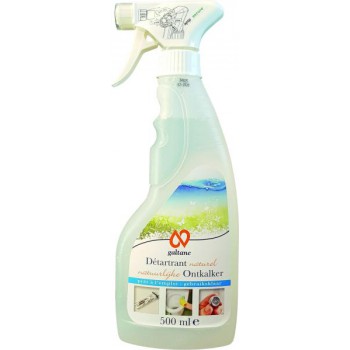
Désodorise, assainit et élimine en douceur les dépôts calcaires dans les cafetières, bouilloires, lavabos, canalisations, toilettes, carrelages, douches… Recharger votre flacon avec le Détartrant...Désodorise, assainit et élimine en douceur les dépôts calcaires dans les cafetières, bouilloires, lavabos, canalisations, toilettes, carrelages, douches… Recharger votre flacon avec le Détartrant concentré.
REF: 2070
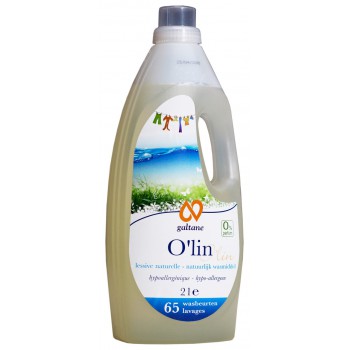
O'lin, lessive naturelle hypoallergénique. O’lin convient aux personnes allergiques, aux peaux sensibles et au linge de bébé. Efficace dès 30°, O’lin se prête au lavage à la main ou en machine....O'lin, lessive naturelle hypoallergénique. O’lin convient aux personnes allergiques, aux peaux sensibles et au linge de bébé. Efficace dès 30°, O’lin se prête au lavage à la main ou en machine. Produit concentré, très économique et non testé sur les animaux. 500 ml : 16 lavages - 2 litres : 65 lavages !
REF: 4010
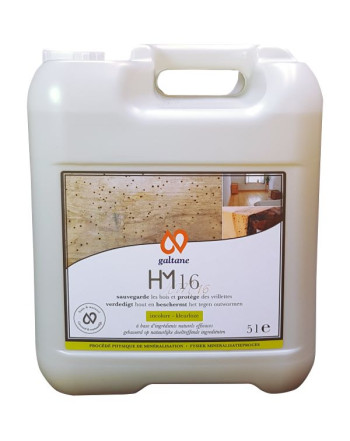
Special furniture - flooring | oak - chestnut HM16 penetrates wood 16 times faster than a drop of water. Does not change the colour of the wood. An excellent preventive, HM16's curative action is...Special furniture - flooring | oak - chestnut
HM16 penetrates wood 16 times faster than a drop of water.
Does not change the colour of the wood. An excellent preventive, HM16's curative action is limited to woodworm (flight holes +/- 1 mm). Colourless, HM16 cares for the wood and is ideal for parquet floors (oak, chestnut) and for ennobling and restoring old furniture. HM16 contains no insecticides or biocides. Galtane HM16 is ready to use and can be kept for 24 months! It poses no risk to pregnant women, infants, allergy sufferers or the sick... For a broader-spectrum action and if colour change is not a problem, opt for Wood Bliss.
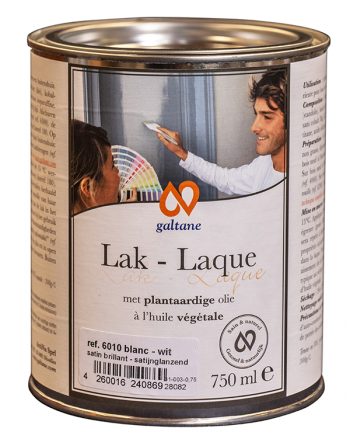
REF: 6010
Peinture opaque intérieure et extérieure pour bois et métal. Elle offre une finition satinée dans plus de 120 couleurs. Vous cherchez un vernis ? Choisissez la laque « no-pigment » ! Bon à savoir :...Peinture opaque intérieure et extérieure pour bois et métal. Elle offre une finition satinée dans plus de 120 couleurs. Vous cherchez un vernis ? Choisissez la laque « no-pigment » ! Bon à savoir : Sa composition riche en huile végétale rend la laque Galtane plus fluide que les laques conventionnelles.
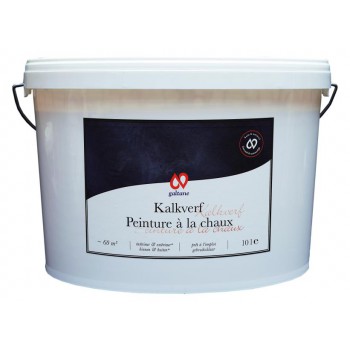
REF: 8888
Lime paint or Limewash paint is available in over 180 colours. Galtane Limewash paint is used in heritage restoration, new build, renovation,... to make interiors healthier. What are the benefits...Lime paint or Limewash paint is available in over 180 colours.
Galtane Limewash paint is used in heritage restoration, new build, renovation,... to make interiors healthier.
What are the benefits of limewash paint?
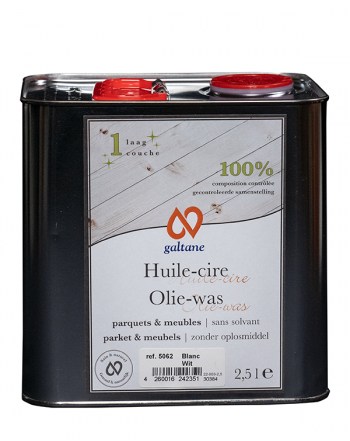
REF: 5060
One-Coat Wax Oil gives wood a resistant, beautiful and pleasant surface. This latest-generation vegetable oil contains sunflower oil, linseed oil and carnauba wax, It contains no solvents ( VOC),...One-Coat Wax Oil gives wood a resistant, beautiful and pleasant surface.
This latest-generation vegetable oil contains sunflower oil, linseed oil and carnauba wax,
It contains no solvents ( VOC), no micro-wax (hydrocarbon wax) or isocyanates. Antistatic and with a pleasant odour, it is ideal for protecting and finishing parquet and furniture.
It has a matt finish. In short, the perfect product for a healthy, natural home.
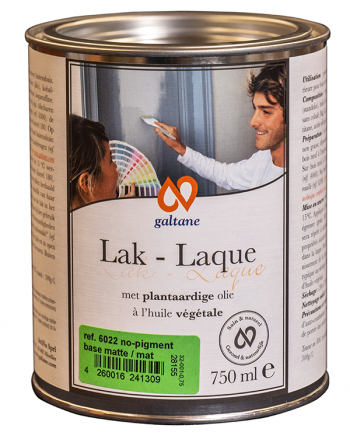
REF: 6022
Vernis transparent intérieure pour bois et métal. Il offre une finition mate. Bon à savoir : Sa composition riche en huile végétale rend la laque "no-pigment" Galtane plus fluide que les vernis...Vernis transparent intérieure pour bois et métal. Il offre une finition mate.
Bon à savoir : Sa composition riche en huile végétale rend la laque "no-pigment" Galtane plus fluide que les vernis conventionnelles.